History of Porto Cathedral | Medieval Origins to Modern Porto
Trace the long evolution of Porto Cathedral from fortified medieval core to one of Porto's defining historic and spiritual landmarks.
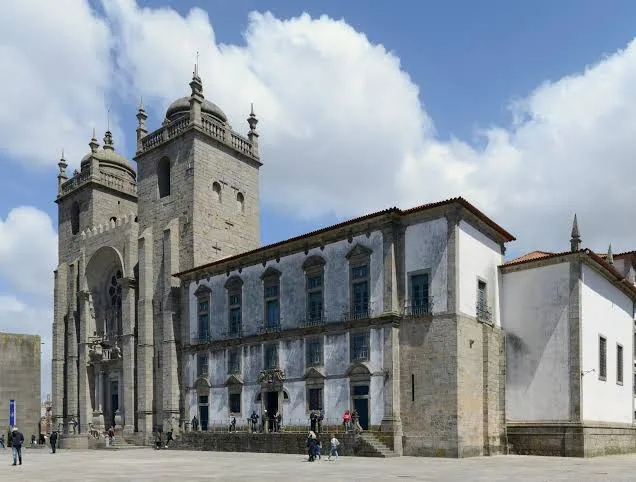
Sé do Porto began as a statement: faith, yes, but also control, boundary, and permanence. In a high position above the river routes, it watched the city become itself.
A concise timeline
- 12th century: Romanesque foundations and defensive posture.
- 13th-14th centuries: Consolidation of ecclesiastical power.
- 15th-17th centuries: Chapels, liturgical refinements, and artistic overlays.
- 18th century: Baroque interventions reshape selected interiors.
- Modern era: Restoration, interpretation, and heritage framing.
Reading power in stone
The cathedral is not merely devotional architecture. It is a civic marker where church history and urban identity intersect. The thick walls, elevated setting, and disciplined massing suggest a building that once had to endure uncertainty as much as host worship.
In Porto, topography and theology are never far apart.
Why this history still matters
- It explains the mixed architectural language visitors notice.
- It clarifies why the cathedral feels both austere and ornate.
- It ties local memory to broader Iberian medieval dynamics.
Quick note for curious readers
History here is layered, not linear:
Romanesque base -> Gothic and later additions -> Baroque accents -> modern conservation.
The result is less a single style than a stone archive of Porto's long transformation.
The city around the cathedral
History at Sé is not locked inside walls. Urban streets, trade routes, and civic ceremonies repeatedly reshaped how the building was used and perceived. In one period it signaled authority; in another it anchored identity; in another it became a heritage emblem for global visitors. Each era added interpretation as much as stone.
To read this properly, imagine time as layers rather than chapters. Nothing fully disappears. A defensive logic may survive in the silhouette long after danger changed form. A liturgical change may alter movement patterns while preserving older symbols.
A historian's quick lens
- Ask what problem the building solved in each era.
- Ask who benefited from each intervention.
- Ask what remained intentionally untouched.
When you do this, the cathedral stops being static and becomes historical dialogue.
저자 소개

Porto Cathedral Editorial Team
이 가이드는 포르투 대성당을 단순한 ‘짧은 포토 스팟’이 아닌, 맥락과 확신을 가지고 체험할 수 있는 장소로 소개하기 위해 작성되었습니다. 각 예배실, 돌길, 전망 포인트가 실제로 느껴지는 이야기의 한 장면이 되기를 바랍니다.
Tags
Comments (0)
Loading comments...