Porto Cathedral Altars Explained | Sacred Art for Visitors
Understand the visual language of Porto Cathedral's altars, from gold and gesture to symbolism, devotion, and artistic intention.
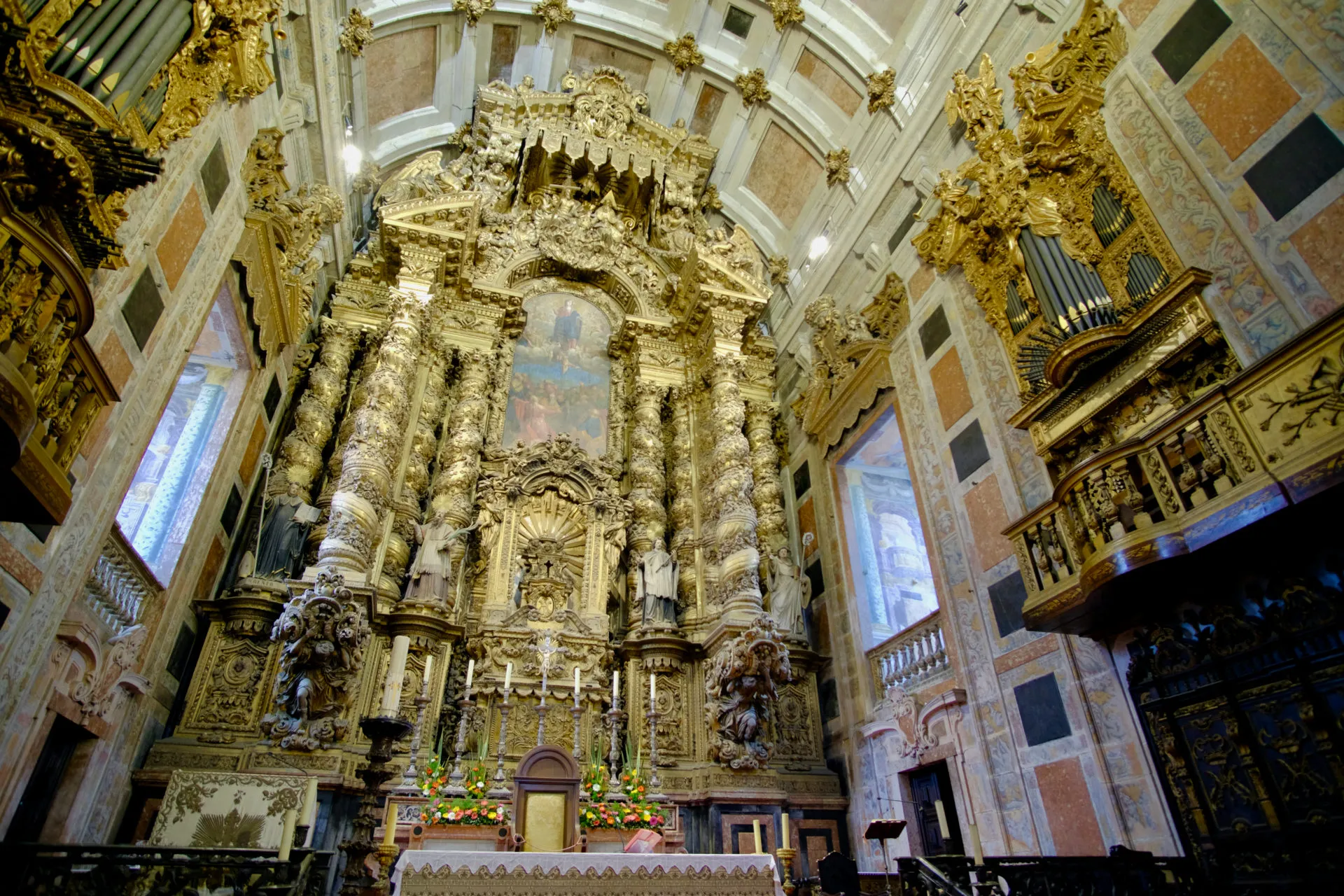
Gold in sacred interiors is not decoration alone; it is argument. At Porto Cathedral, the altars articulate presence, hierarchy, and devotion through material intensity.
How to interpret an altar in 4 steps
| Step | Question |
|---|---|
| 1 | Who is centered, and who surrounds that figure? |
| 2 | Where does light naturally fall? |
| 3 | Which gestures direct your eye? |
| 4 | What feeling is being produced: awe, tenderness, warning? |
Comparative notes
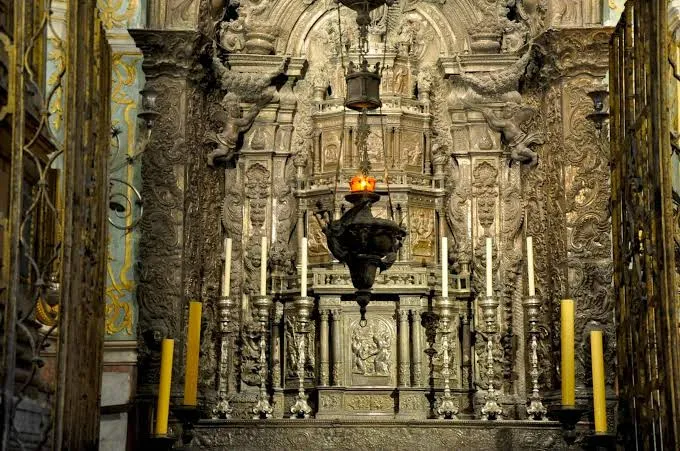
- "Dense ornament" often signals theatrical devotion.
- "Vertical pull" can suggest transcendence.
- "Warm gold fields" create emotional immediacy.
Art here is performative theology: it teaches by staging.
If you usually skip religious art, this is the place to change that habit.
Looking beyond ornament
Altars can appear overwhelming at first, especially when gilding dominates the field. The key is to separate layers: structural frame, figure hierarchy, symbolic attributes, and directional gestures. Once separated, the composition reads like a carefully choreographed argument.
Notice also the relationship between distance and meaning. From far away, the altar performs unity. From near, it reveals craft decisions, tool marks, and micro-choices in texture and emphasis.
Reflection prompt
- Which detail felt most theatrical?
- Which detail felt most intimate?
- Did your response change between first and second viewing?
In many visits, the turning point comes when viewers stop asking "Is this too much?" and start asking "What is this trying to make me feel?"
A szerzőről

Porto Cathedral Editorial Team
Ez az útmutató azért készült, hogy a látogatók kontextussal és magabiztossággal élhessék át a portói katedrálist — a gyors pillanatképeken túl —, így minden kápolna, kőfolyosó és kilátópont egy valóban átélhető történet részévé váljon.
Tags
Comments (0)
Loading comments...